Category: Ecommerce Websites

  • Why WooCommerce Is the Best Choice Compared to Shopify and Other E-Commerce Platforms

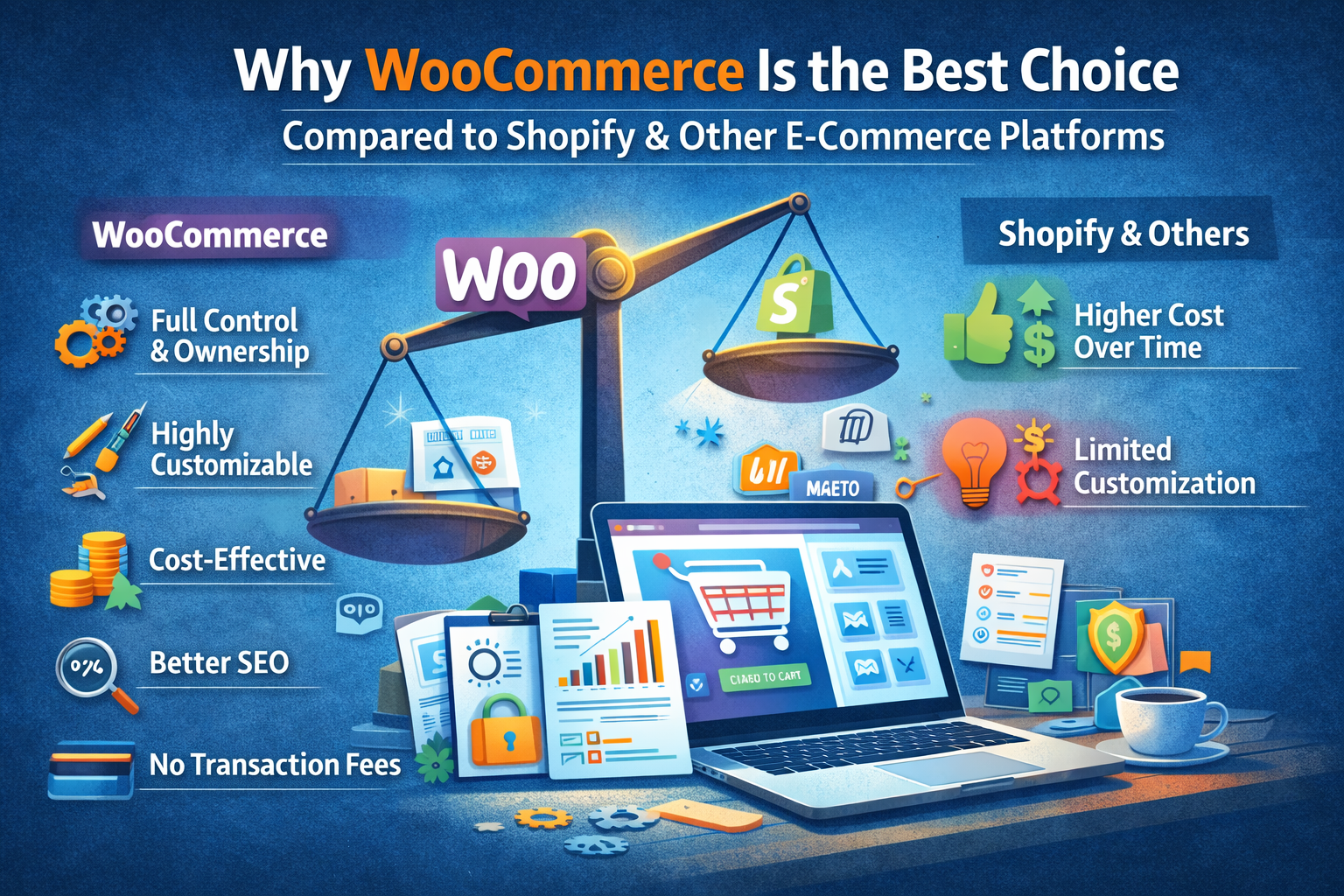
    Why WooCommerce Is the Best Choice Compared to Shopify and Other E-Commerce Platforms

    Choosing the right e-commerce platform is one of the most important decisions for any online business. With options like Shopify, Wix, Magento, and others available, it can be confusing to decide which one is right.

    However, in 2026, WooCommerce stands out as one of the most powerful, flexible, and cost-effective e-commerce solutions — especially for growing businesses.

    Let’s explore why WooCommerce is often the best choice.

    Complete Ownership and Control

    One of the biggest advantages of WooCommerce is that it gives you full control over your website.

    Unlike Shopify and other hosted platforms:

    • You own your website and data
    • You are not locked into a monthly subscription model
    • You can customize every aspect of your store

    With WooCommerce, your business is not dependent on platform limitations.

    Highly Customizable

    WooCommerce is built on WordPress, which means endless customization possibilities.

    You can:

    • Design your store exactly how you want
    • Add custom features without restrictions
    • Use thousands of plugins and themes
    • Scale as your business grows

    Other platforms often limit customization unless you pay extra or upgrade plans.

    Cost-Effective in the Long Run

    While Shopify charges monthly fees, transaction fees, and app costs, WooCommerce can be much more cost-efficient over time.

    With WooCommerce:

    • No mandatory monthly platform fee
    • Flexible hosting options
    • Free and paid plugins based on your needs

    This makes it ideal for startups and growing businesses.

    Better SEO Capabilities

    WooCommerce, powered by WordPress, is highly SEO-friendly.

    You get:

    • Full control over URLs
    • Advanced SEO plugins
    • Better content management for blogs and pages

    Compared to other platforms, WooCommerce offers more flexibility for ranking on search engines.

    No Transaction Fees

    Many platforms charge additional transaction fees unless you use their payment gateways.

    WooCommerce allows you to:

    • Use any payment gateway
    • Avoid unnecessary transaction charges
    • Optimize payment options for your customers

    Scalability for Growing Businesses

    Whether you’re selling 10 products or 10,000, WooCommerce can scale with your business.

    You can:

    • Add unlimited products
    • Integrate advanced tools
    • Expand functionality anytime

    This makes it suitable for both small and large businesses.

    Strong Community and Support

    WooCommerce has a massive global community.

    This means:

    • Regular updates and improvements
    • Easy access to developers and resources
    • Continuous innovation

    You’re never stuck without solutions.

    When Shopify or Other Platforms Might Work

    While WooCommerce is powerful, platforms like Shopify can be useful for:

    • Beginners who want a quick, ready-made setup
    • Businesses that prefer an all-in-one managed solution

    However, these conveniences often come with limitations and ongoing costs.

    Final Thoughts

    WooCommerce offers the perfect balance of flexibility, control, scalability, and cost-efficiency. For businesses that want long-term growth and complete ownership, it is often the best choice compared to Shopify and other e-commerce platforms.

    At Build Websites, we specialize in building high-performing WooCommerce stores that are designed for growth, conversions, and long-term success.

  • How to Reduce Cart Abandonment in 2026

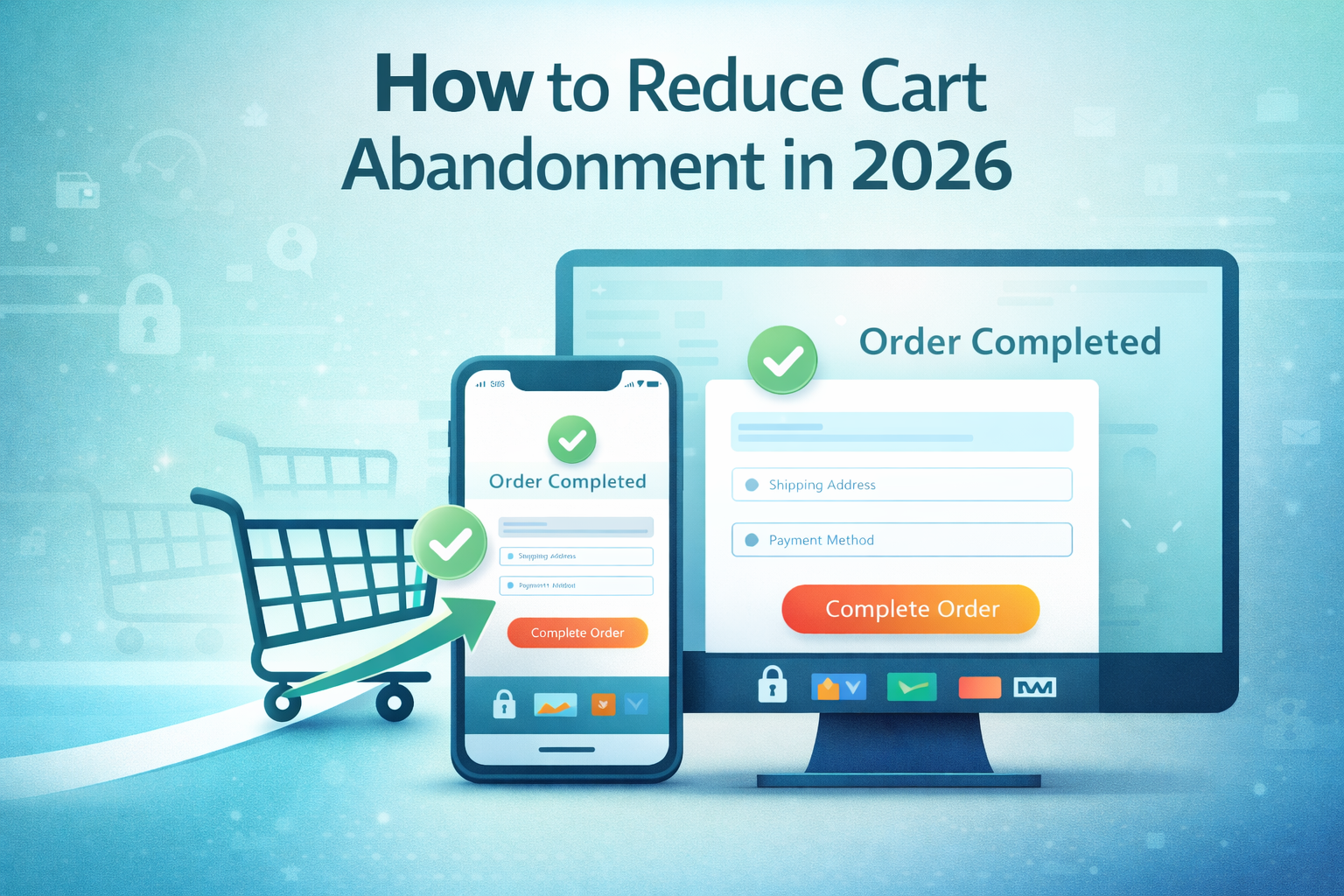
    How to Reduce Cart Abandonment in 2026

    Cart abandonment continues to be one of the biggest challenges for online businesses. In 2026, customer expectations are higher than ever—buyers want speed, trust, and a seamless checkout experience. Even small friction points can cause potential customers to leave without completing their purchase.

    Let’s explore why cart abandonment happens and how you can reduce it effectively.

    Why Shoppers Abandon Carts

    Understanding the problem is the first step. Common reasons include:

    • Complicated or lengthy checkout process
    • Unexpected shipping or tax charges
    • Slow website loading speed
    • Limited payment options
    • Lack of trust signals or security assurance
    • Mandatory account creation

    Simplify the Checkout Process

    In 2026, fewer clicks mean more conversions.

    • Use a single-page or minimal-step checkout
    • Allow guest checkout
    • Autofill address and payment details
    • Remove unnecessary form fields

    A smooth checkout experience significantly increases completion rates.

    Be Transparent With Pricing

    Hidden costs are a major turn-off.

    • Show shipping charges early
    • Clearly display taxes and additional fees
    • Offer free shipping thresholds when possible

    Transparency builds trust and reduces last-minute drop-offs.

    Optimize Website Speed and Performance

    Speed matters more than ever.

    • Optimize images and scripts
    • Use fast, reliable hosting
    • Ensure mobile performance is top-notch

    A slow checkout page can instantly drive customers away.

    Offer Multiple Payment Options

    Modern shoppers expect flexibility.

    • UPI, credit/debit cards, net banking
    • Wallets like Paytm, PhonePe, Google Pay
    • Buy Now Pay Later (BNPL) options

    The more payment choices you provide, the lower the friction.

    Build Trust at Checkout

    Customers won’t pay if they don’t feel safe.

    • Display SSL security badges
    • Show trusted payment gateway logos
    • Add customer reviews or testimonials near checkout
    • Clearly mention return and refund policies

    Trust signals play a huge role in final purchase decisions.

    Use Smart Cart Recovery Strategies

    Technology in 2026 allows smarter follow-ups.

    • Automated abandoned cart emails
    • WhatsApp reminders with product links
    • Exit-intent popups offering discounts
    • Personalized reminders based on browsing behavior

    Timely nudges can recover a significant percentage of lost carts.

    Ensure Mobile-First Checkout Design

    Most users shop on mobile.

    • Large buttons and readable text
    • Easy thumb navigation
    • Mobile-friendly payment flows

    If your mobile checkout isn’t smooth, you’re losing sales daily.

    Conclusion

    Reducing cart abandonment in 2026 isn’t about tricks—it’s about creating a seamless, trustworthy, and customer-first shopping experience. When your website is fast, transparent, and easy to use, customers are far more likely to complete their purchase.

    At Build Websites, we design conversion-focused e-commerce websites that help businesses turn visitors into paying customers.

  • Checkout Page Optimization Tips for Better Conversions

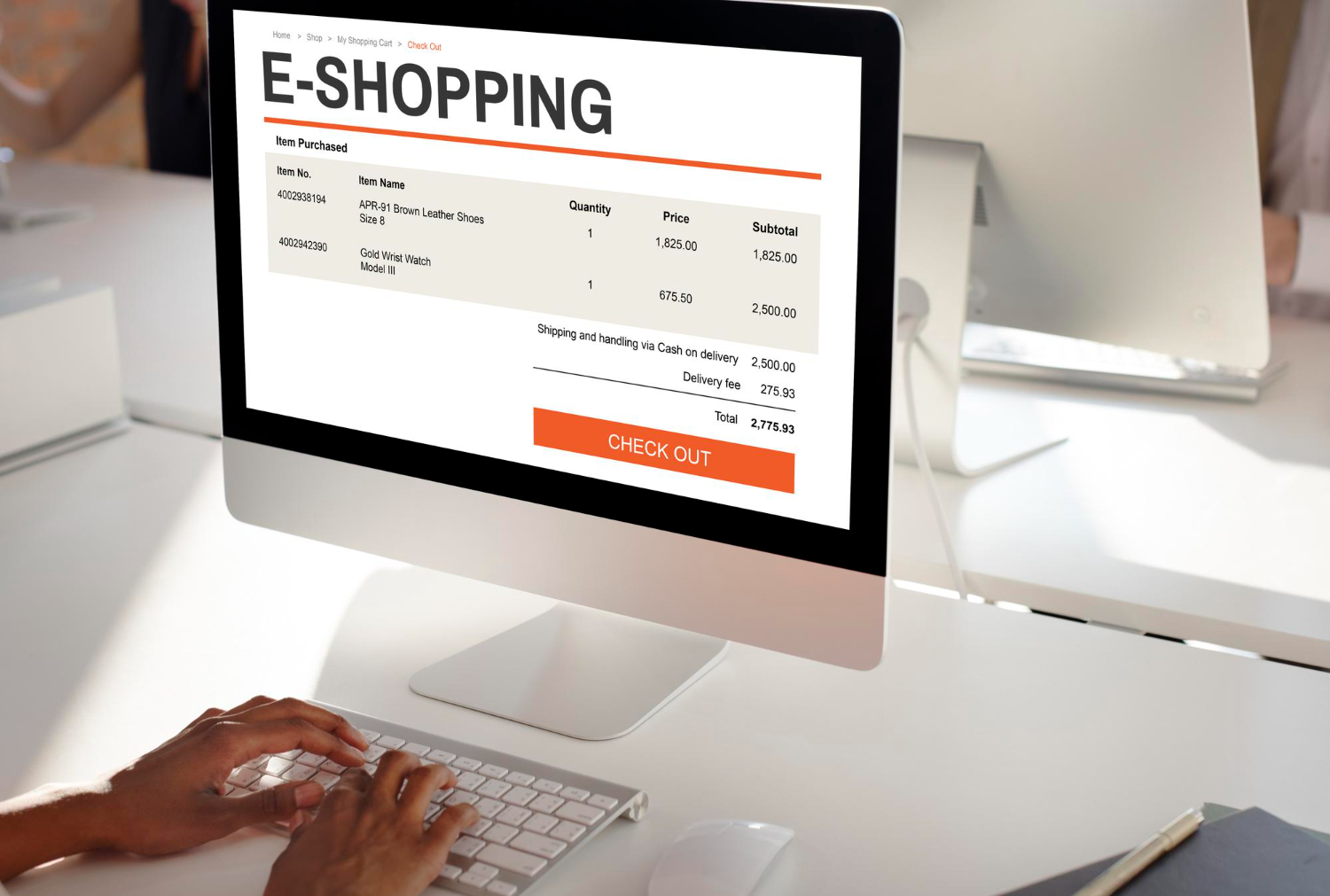
    Checkout Page Optimization Tips for Better Conversions

    Many online stores lose customers at the final step — the checkout page. Even when shoppers are ready to buy, a complicated or confusing checkout experience can lead to abandoned carts and lost revenue.

    In 2025, businesses must focus on creating a checkout process that is fast, simple, and trustworthy to maximize conversions.

    Keep the Checkout Process Simple

    The more steps involved in checkout, the higher the chances customers will drop off. A clean, minimal process encourages users to complete their purchase without frustration.

    Best practices include:

    • Reduce unnecessary form fields
    • Use a clear step-by-step structure
    • Avoid distractions and clutter
    • Show progress indicators

    Offer Guest Checkout Options

    Not every customer wants to create an account before buying. Forcing registration can lead to cart abandonment.

    Guest checkout allows users to complete purchases quickly while giving them the option to create an account afterward.

    Optimize for Mobile Users

    Many purchases happen on mobile devices. A checkout page that works smoothly on smaller screens significantly improves conversions.

    Mobile-friendly checkout should include:

    • Large touch-friendly buttons
    • Easy-to-fill forms
    • Auto-fill features
    • Fast loading speed

    Display Multiple Secure Payment Options

    Customers feel more comfortable when they see familiar and trusted payment methods. Offering multiple payment options increases flexibility and builds confidence.

    Popular options include:

    • UPI payments
    • Credit and debit cards
    • Net banking
    • Digital wallets

    Show Trust Signals Clearly

    Security concerns are one of the biggest reasons for abandoned carts. Displaying trust badges, SSL certificates, and secure payment icons reassures customers that their data is protected.

    Clear return policies and customer support contact details also build trust.

    Provide Transparent Pricing

    Unexpected costs at checkout are a major reason customers leave. Always display shipping charges, taxes, and additional fees upfront.

    Transparency helps customers feel confident and prevents last-minute surprises.

    Enable Auto-Fill and Smart Form Design

    Long or complicated forms discourage users. Smart form design improves speed and convenience.

    Tips include:

    • Use address auto-fill
    • Enable one-click payments where possible
    • Highlight errors clearly
    • Use simple labels and placeholders

    Optimize Checkout Speed

    Slow checkout pages increase frustration and reduce conversions. Optimize images, scripts, and hosting to ensure fast loading times.

    Speed improvements not only help users but also improve search engine rankings.

    Add Clear Call-to-Action Buttons

    Your checkout page should guide users toward completion. Buttons like “Place Order” or “Complete Purchase” should be prominent and easy to understand.

    Avoid confusing wording that may cause hesitation.

    Conclusion

    Checkout optimization is one of the most effective ways to increase conversions without increasing traffic. A smooth, secure, and user-friendly checkout experience encourages customers to complete their purchases and return in the future.

    At Build Websites, we help businesses design high-performing e-commerce websites with optimized checkout systems that reduce cart abandonment and drive more sales.

  • Secure Payment Gateway Options for Indian E-Stores

    Secure Payment Gateway Options for Indian E-Stores

    If you’re running an Indian e-commerce store, choosing the right payment gateway is absolutely essential — not just to accept payments, but to earn customer trust, reduce checkout drop-offs, and protect financial data.

    A secure payment gateway encrypts sensitive payment information, helps prevent fraud, and ensures transactions are smooth and reliable. In India’s booming e-commerce landscape, having secure, trusted payment options can significantly increase conversions and customer satisfaction.

    Here are the best secure payment gateway options for Indian e-stores in 2025:

    🔐 1. Razorpay

    One of the most popular payment gateways in India, Razorpay supports a wide range of payment methods — UPI, credit/debit cards, net banking, wallets and more. Its easy integration, transparent pricing, and PCI DSS compliance make it a top choice for both small stores and large e-commerce businesses.

    Why choose Razorpay:

    • Supports UPI, cards, wallets, and net banking
    • Easy setup with plugins for WooCommerce, Shopify, Magento, etc.
    • Built-in fraud detection and secure checkout


    💳 2. PayU

    PayU is another trusted Indian payment gateway used by many e-commerce sites. It provides multi-channel payment support with strong encryption and compliance standards. Approved by the Reserve Bank of India as a payment aggregator, PayU focuses on reliability and safety.

    Key features:

    • No setup fees in many plans
    • Supports multiple payment modes
    • Detailed analytics and settlement controls

    🛒 3. CCAvenue

    A long-standing player in the Indian payment space, CCAvenue offers one of the broadest payment method supports — including cards, net banking, wallets, UPI and international options. With advanced security checks like 3D Secure and PCI DSS compliance, it’s suited for growing e-commerce businesses.

    Best for: Stores expecting high transaction volume or multi-currency needs.

    📦 4. InstaMojo

    InstaMojo is an easy-to-use gateway ideal for small and medium businesses. It supports UPI, cards, wallets and net banking, and doesn’t charge setup fees, making it beginner-friendly. Its checkout links can even be shared directly via WhatsApp or social media.

    Good fit for: Small stores, freelancers, and digital product sellers.

    💼 5. Cashfree

    Cashfree provides fast, secure e-commerce payments with features like instant settlement, payouts, and mission-critical API support. It supports UPI, wallets, cards, net banking, and more — and is known for smooth integrations and strong performance.

    Best for: Businesses that want quick settlements and automation.

    📱 6. UPI-Enabled Gateways (PhonePe, Paytm & More)

    India’s Unified Payments Interface (UPI) is one of the most secure and widely used payment systems. Many gateways (like Razorpay, Paytm, PhonePe and others) support instant UPI payments, which use encrypted two-factor authentication to protect transactions.

    Benefits of UPI:

    • Instant payment confirmation
    • Lower transaction costs
    • Guaranteed RBI-regulated security

    Tips for Choosing a Secure Payment Gateway

    When selecting a payment gateway for your e-store, consider the following:

    🔒 Security Standards

    Ensure the provider supports PCI DSS compliance, HTTPS encryption, tokenisation and fraud detection tools.

    🔧 Easy Integration

    Look for plugins or APIs that work with your platform (WooCommerce, Shopify, Magento, etc.) to avoid complex development.

    💰 Transparent Fees

    Compare setup fees, transaction charges, settlement time, and refund processing fees.

    📊 Reporting & Analytics

    Good gateways provide dashboards that help you monitor sales, failed transactions, and customer trends.

    📞 Support & Documentation

    Responsive customer support and thorough documentation make troubleshooting easier.

    Final Thoughts

    A secure payment gateway isn’t just about processing payments — it’s about building trust with your customers while reducing friction at checkout. Whether you’re just starting your e-store or looking to upgrade payment options, choosing the right gateway can dramatically improve both user experience and conversions.

    At Build Websites, we help Indian businesses integrate and configure reliable, secure payment systems that align with your brand and audience. Let’s make your checkout experience smooth, secure, and sales-focused.

    👉 Reach out to Build Websites to set up the right payment gateway for your e-store!

  • Essential Plugins Every WordPress Website Should Have in 2025

    Essential Plugins Every WordPress Website Should Have in 2025

    WordPress powers millions of websites worldwide — from business sites to e-commerce stores and blogs. But a core reason WordPress is so flexible and powerful is plugins: tools that extend your site’s functionality without coding.

    With thousands of plugins available, it can be overwhelming to choose the right ones. In 2025, certain plugins have emerged as must-haves for every WordPress site — whether you’re building a simple business website or a fully featured online store. Here’s the list every website owner should know.

    1. SEO Optimization Plugin

    Yoast SEO or Rank Math: A strong SEO plugin helps your content be found on Google and other search engines. It lets you optimise meta titles, descriptions, readability, XML sitemaps, and structured data — essential for ranking and visibility.

    2. Speed & Performance Plugin

    WP Rocket or LiteSpeed Cache: Website speed has a significant impact on user experience and search engine rankings. WP Rocket handles caching, lazy loading, minification, CDN integration, and more. These tools significantly improve performance without technical hassle.

    3. Security Plugin

    Wordfence Security: Security should never be an afterthought. Wordfence provides a firewall, malware scanning, and login protection — exactly what sites need to defend against hacks and brute-force attacks.

    4. Backup Solution

    UpdraftPlus: Regular backups are critical. UpdraftPlus lets you schedule automatic backups to cloud storage (Dropbox, Google Drive, etc.) and restores your site quickly if something goes wrong.

    5. Page Builder

    Elementor: A drag-and-drop design plugin that makes building beautiful responsive pages easier — especially if you’re not coding from scratch. It offers templates, widgets, and powerful design controls

    6. Contact & Lead Form Plugin

    WPForms: Forms help you capture leads, enquiries, survey responses, and more. WPForms is beginner-friendly with drag-and-drop form building and integrations with email services.

    7. Image Optimization Plugin

    Smush (or ShortPixel): Large images slow your site. Tools like Smush compress and convert images to modern formats (WebP/AVIF), improving load speeds and Core Web Vitals.

    8. E-Commerce Plugin (if selling online)

    WooCommerce: If you run an online store, WooCommerce is the most popular e-commerce plugin, fully integrating product management, payments, shipping, and more into WordPress.

    9. Analytics Integration

    MonsterInsights: Track your visitors, behaviours, conversions, and traffic sources right from your WordPress dashboard. This helps you improve your site based on real data.

    10. Multi-Language Support (Optional)

    TranslatePress: If you want to reach international audiences, multilingual support is essential. TranslatePress lets you translate your entire site into multiple languages.

    Final Thoughts

    Plugins make WordPress powerful, but quality matters. Too many plugins can slow your website and create security risks. Choose well-maintained, regularly updated plugins that align with your goals.

    Whether you’re launching a business site, blog, or e-commerce store, these plugins help ensure your WordPress site is fast, secure, optimised, and ready for growth in 2025.

    At Build Websites, we help you choose and configure the right WordPress plugins — so your website performs beautifully and scales with your business.

    👉 Need help setting up your WordPress site correctly? Contact Build Websites today!

  • E-Commerce Website Design Trends for 2025

    E-Commerce Website Design Trends for 2025

    Introduction

    As online shopping continues to evolve at lightning speed, your e-commerce website needs to stay ahead of design trends—not just for looks, but for performance, user trust and conversions. In 2025, design is more than aesthetics—it’s about personalisation, immersion, speed, sustainability and smart interaction. At Build Websites, we specialise in creating online stores that don’t just look good—they win.

    1. AI-Driven Personalisation

    In 2025, websites will use AI and machine-learning to deliver hyper-personalised shopping experiences: tailored homepages, dynamic product lists, smart search, chat assistants and even layout changes per user. 
    For example, a returning customer might see a custom banner, product recommendations and colours based on their past behaviour.
    Takeaway: Use AI-powered recommendation engines and dynamic content blocks to make each visitor feel seen.

    2. Immersive 3D, AR/VR & Interactive Product Views

    To reduce purchase hesitation and boost engagement, 3D models, AR “try-ons”, VR showrooms and interactive product visualisations are increasingly common.
    Takeaway: If you sell products that benefit from seeing in real-space (furniture, fashion, accessories) invest in immersive visuals.

    3. Mobile-First & Super-Fast Performance

    Mobile commerce is dominant, so a mobile-first layout, optimized images, PWA (progressive web app) features, minimal load time and snappy checkout are non-negotiables. 
    Takeaway: Build with mobile in mind first, then scale to larger screens. Test on real smartphones. Prioritise speed and responsive UX.

    4. Minimalist, Clean Design with Purpose

    Simplicity is powerful. In 2025, e-commerce designs lean towards minimalism: ample whitespace, clean typography, strong CTAs, and layouts built for clarity not clutter. 
    Takeaway: Remove non-essential elements. Let your products shine. Ensure navigation and purchase path are crystal clear.

    5. Micro-Interactions, Smooth Transitions & Asymmetry

    Small animations, hover feedback, subtle motion and even non-traditional layouts (diagonals, asymmetry) are rising to create more engaging browsing experiences.
    Takeaway: Use micro-animations where they enhance UX (e.g., ‘Add to Cart’ feedback), but balance with performance. Explore layouts beyond strict grids for visual impact.

    6. Voice Commerce, Conversational UI & Advanced Search

    With voice assistants and smart devices increasing, designing for voice search, conversational UI (chatbots/voice commands), and advanced search/filter will matter more. 
    Takeaway: Structure content for voice keywords (“buy red sneakers size 9”), build chat/voice assistants where it fits, and upgrade search capabilities.

    7. Dark Mode, Accessibility & Inclusive Design

    Dark mode layouts, high-contrast themes and strong accessibility are no longer extras—they’re expectations. Accessibility supports trust, usability and brand reputation. 
    Takeaway: Offer dark mode toggle, ensure color contrast meets standards, use proper alt texts/headings, and test for keyboard/voice control usability.

    8. Sustainability & Ethical Design

    Consumers increasingly care about sustainability and brand values. Websites will reflect this via eco-friendly visuals, efficient code, low-energy hosting and transparent design. 
    Takeaway: Consider green-hosting, optimise resource usage, communicate your sustainability efforts, and design with purpose.

    9. Bold Typography & Expressive Visuals

    In 2025, typography takes centre stage. Big, bold fonts, expressive imagery, and colour schemes that reflect brand personality will help you stand out.
    Takeaway: Choose standout fonts for key headings, maintain readability, and use a visual hierarchy that guides user focus to actions.

    10. Headless Commerce & Modular Architecture

    Technical architecture will influence design. Headless CMS/e-commerce means the front-end is decoupled from backend logic—giving flexibility to deliver experiences across web, mobile, IoT, etc. 
    Takeaway: If you plan to scale or integrate multiple touch-points (apps, kiosks, IoT), choose a modular, future-ready architecture now.

    Conclusion

    Design in 2025 isn’t just about what looks good—it’s about what works. A successful e-commerce website marries aesthetics with experience, speed, intelligence, and values. For your next online store or redesign, prioritise performance, personalisation and purpose. At Build Websites, we build e-commerce platforms that are future-proof, conversion-focused and designed to scale. Let’s talk about how your store can lead—not follow.

  • How to Brand Your Ecommerce Website?

    How to Brand Your Ecommerce Website?

    In current time online shopping is hitting its peak. Being a business owner if you don’t have a business website, then you are missing great opportunity for your business growth.

    The main problem that stops many business owners from building their business website and branding it is that, they think branding is a very difficult task to accomplish. Though, with required knowledge it can be achieved easily.

    Let’s have a look what is branding, how you can brand your ecommerce website and why it is essential.

    What is Branding?

    The most powerful marketing asset for any online brand is having a business website. A website always leaves the first impression on the potential customers. So, brands must ensure that their business website is branding their business products or services in the best possible way.

    Branding is one of the most important aspects of any business website which can never be ignored. The way your develop brand identity is what that can set you apart from your competitors. Moreover, branding helps business to build credibility and trust with the target audience.

    Branding a business website is more than simply going for fancy designs, logos and fonts. It is all about crafting a consistent look and feel across the entire website that can showcase your company’s distinctive personality.

    Need of branding for ecommerce websites?

    For ecommerce website or business websites, branding is very essential that anything else. Actually, according to the experts it is most crucial, because, it offers a wide range of benefits to brands, such as attracting new customers, retaining existing consumers, building customer trust & loyalty, and improving overall business. People mostly misunderstand the effect of a good quality brand; hence to overcome that, you have to examine how trusted rebranding agencies are performing their task.

    Since, today almost every company, from small businesses to multinationals, took their business online. Therefore, to compete with them, good branding is very essential. Else, your website may get lost in the huge ocean of digital world.

    Let’s consider why one should focus on branding;

    • It increases the credibility of the website or the ecommerce stores
    • It transforms your regular outlet into a trustworthy brand
    • It brings a significant amount of organic traffic to your website
    • It saves time & money which is required to spend on marketing as well as advertising

    Designing Website Layout Carefully

    The thing that matters the most when it comes to branding is the website layout. Good website’s design can make your site look unique and also makes it functional and easily understandable.

    For perfectly designing the website layout, one should consider:

    • The structure should be easy to navigate and use.
    • The layout should be visually appealing to attract new users and increase engagement.
    • The design must be responsive or mobile-friendly.

    Impressive Logo Design

    Branding majorly depends on creating a unique identity for the business. And, without a logo one cannot build a unique identity. That logo helps people to differentiate the brand from other companies, and it also assist company’s name to stay in customer’s mind. Moreover, a brand logo also conveys the brand message. Therefore, creating a memorable and impressive logo for the brand is very essential.

    To create an eye-catching logo one must follow the below mentioned tips:

    • It should be simple: It should be understandable and easy to remember. Avoid too much colours or complex shapes.
    • It should be relevant: It should be relevant to the business’ unique values and prepositions.
    • Try using strong colors: Strong color combination always keeps the logo out from competition.
    • It should be unique: It must be unique and should not be related to any other.
    • It should be scalable: It should be scalable to be used in numerous sizes and platforms.

    Color Palette

    Choosing the correct color palette for your business website is very essential for branding. Picking the accurate colors can make a connection with your viewer, which will ultimately lead to additional conversions and leads. Though, selecting the exact color palette is not that easy. To achieve your goals, you have to consider some factors like the emotions that you want to evoke, the psychographics and demographics of your target audience, and the brand message you want to convey.

    Let’s have a look on some tips for selecting the right color palette:

    • Take limited colors, maximum three or four. Numerous colors can make it overwhelming and can give a cluttered look to your website.
    • Use tools to make a harmonious colors scheme.
    • Consider using the brand’s colors only.
    • Use other colors versions to create incredible contrast.

    Choose Correct Typography

    The technique of positioning written language to make it readable, legible, and appealing is called as Typography. It involves choosing typefaces, point size, line length, spacing, as well as letter-spacing. The typography of your website says a lot about your brand and its aesthetic sense. It also conveys playfulness, professionalism, or other feeling that you want your visitors to experience. Thus, it is crucial to select the correct typography for your website.

    Improve User Experience

    To brand your business website it is very essential to invest your time and money on improving the user experience. It should be visually appealing and must have user-friendly interface that can make the visitors, spend maximum time in your pages to find the products/services they are looking for. Website with great user experience encourages its consumers to visiting the website repeatedly. Eventually, it improves leads and conversions.

    If your website doesn’t offer a good user experience, then you will not get the fruit of the hard work that you put on SEO, advertising, marketing, and designing.

    Consistency

    Another key to success for branding is consistency. Each and every page of your business website must reflect your company’s branding. Maintaining the consistency is very challenging specifically for those websites, which have multiple pages and web admins. Yet, by following the below mentioned points you can ensure your website’s consistency with company’s branding.

    • Pick and use same fonts, color scheme, and design elements on every page.
    • Don’t forget to add the brand logo on every page.
    • Match the website’s tone & voice with the company’s values & identity.

    Creating the best Content Strategy

    As we all know in digital world there is a saying that “content is king”. And when it comes to website branding this phrase perfectly matches. One of the most important elements of any website for its online presence is the website’s content which can make or break the chances of success.

    For any business website it is very essential to create great content strategy. It should be informative, well-written, and engaging to grab audience’s attention and transform leads to conversions. The content strategy guarantees that the website is aligned with the business’s objectives and goals. Great content strategy also helps in keeping the content fresh as well as relevant, thereby motivating visitors to return.


    Build Websites is a leading web design and development company in India and we offer all kinds of website design and development services at affordable prices. We also offer SEO and digital marketing solutions to take your business to the next level. For more information, contact us today!