Blog
Core Web Vitals in 2026: What Website Owners Must Know
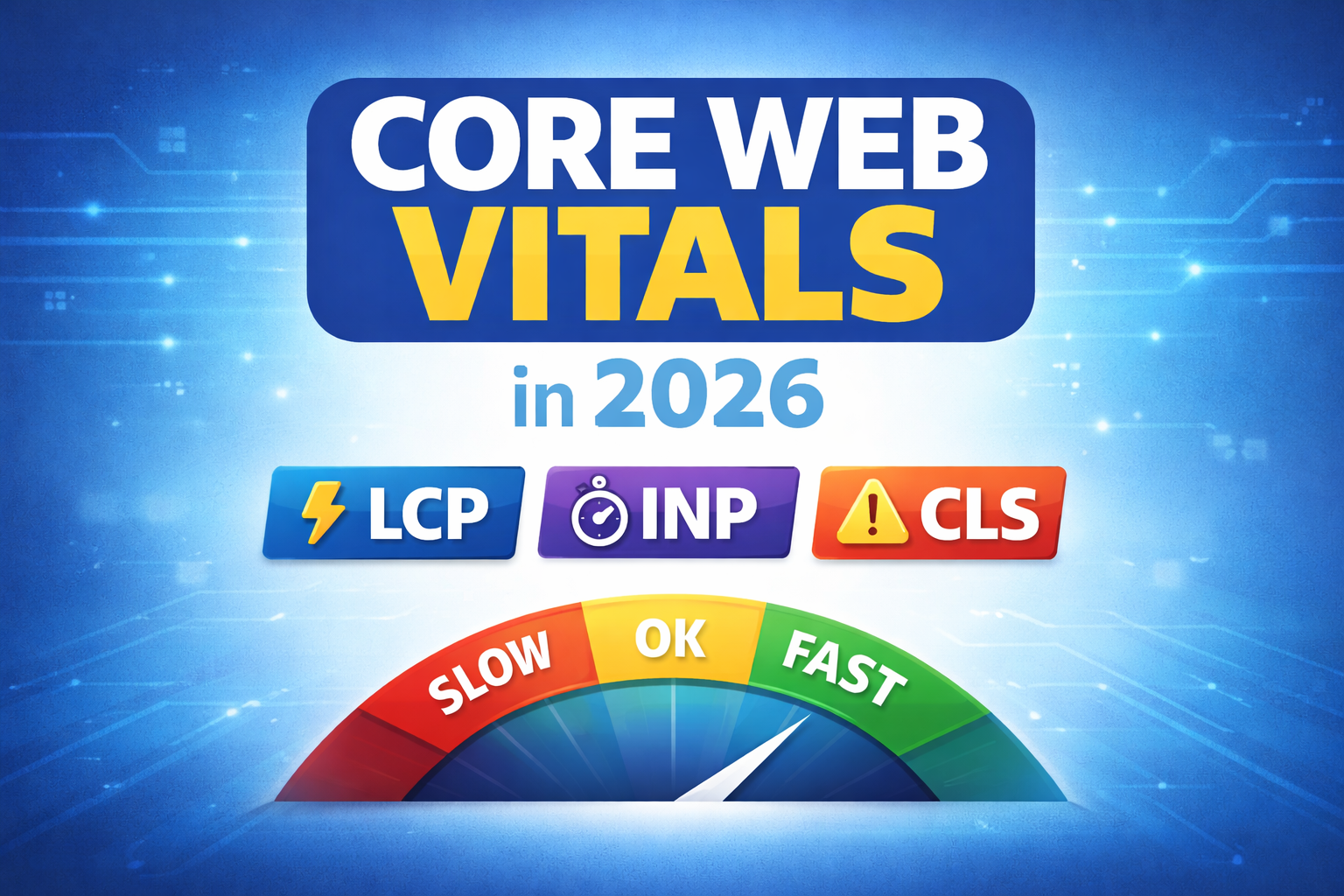
Website performance is no longer just a technical concern — it’s a business priority. In 2026, Core Web Vitals continue to play a major role in how users experience your website and how search engines rank it.
If your website is slow, unstable, or frustrating to use, visitors won’t stay — and Google won’t rank it well. Understanding Core Web Vitals helps you stay competitive, visible, and conversion-ready.
Let’s break down what website owners must know in 2026.
What Are Core Web Vitals?
Core Web Vitals are a set of performance metrics introduced by Google to measure real user experience on a website. They focus on three critical aspects:
- Loading speed
- Interactivity
- Visual stability
In 2026, these metrics are even more refined and user-centric.
1. Largest Contentful Paint (LCP)
LCP measures how quickly the main content of a page loads. This could be a hero image, banner, or main text block.
In 2026, users expect near-instant loading. A slow LCP makes your website feel heavy and unreliable.
To improve LCP:
- Optimise images and videos
- Use fast, reliable hosting
- Enable caching and CDN
- Avoid unnecessary scripts
2. Interaction to Next Paint (INP)
INP has replaced older interaction metrics and measures how responsive your website feels when users click, tap, or interact.
A future-ready website must react instantly to user actions. Delays create frustration and reduce trust.
To improve INP:
- Minimise heavy JavaScript
- Use efficient themes and plugins
- Avoid blocking scripts
- Optimise animations and transitions
3. Cumulative Layout Shift (CLS)
CLS measures visual stability — how much elements move around while the page loads.
Unexpected shifts cause users to click the wrong buttons, abandon pages, or lose trust.
To reduce CLS:
- Set fixed dimensions for images and ads
- Avoid late-loading fonts and banners
- Maintain consistent layout spacing
Why Core Web Vitals Matter More in 2026
In 2026, search engines prioritise experience over keywords. A website that feels smooth, fast, and stable naturally performs better in rankings.
Core Web Vitals directly impact:
- SEO rankings
- Bounce rate
- Conversion rate
- Mobile usability
- Brand credibility
A well-optimised website keeps users engaged longer and encourages action.
Mobile Performance Is Critical
Most website traffic now comes from mobile devices. Google primarily evaluates Core Web Vitals based on mobile performance.
If your mobile experience is slow or unstable, desktop optimisation alone won’t help. Mobile-first optimisation is mandatory in 2026.
Tools to Measure Core Web Vitals
Website owners should regularly monitor performance using:
- Google Search Console
- PageSpeed Insights
- Lighthouse reports
These tools show real-world performance data and highlight areas for improvement.
Common Mistakes Website Owners Still Make
- Ignoring performance after website launch
- Using too many plugins or heavy themes
- Uploading unoptimised images
- Choosing cheap or overloaded hosting
- Not testing updates before publishing
Avoiding these mistakes can dramatically improve your Core Web Vitals.
How Build Websites Helps
At Build Websites, we design and optimise websites with Core Web Vitals in mind from day one. From performance-focused design to clean development and ongoing optimisation, we ensure your website meets 2026 standards — not outdated ones.
Conclusion
Core Web Vitals in 2026 are about delivering a fast, smooth, and frustration-free experience. Websites that prioritise performance will rank better, convert more users, and build long-term trust.
If you want your website to stay competitive in 2026 and beyond, Core Web Vitals cannot be ignored.
Share this post

Contacts
-
D-45/A/4, Shibalaya, 2nd Floor, Module - S1, Rabindrapally, Kolkata -700086, West Bengal, India
-
We Accept:
